


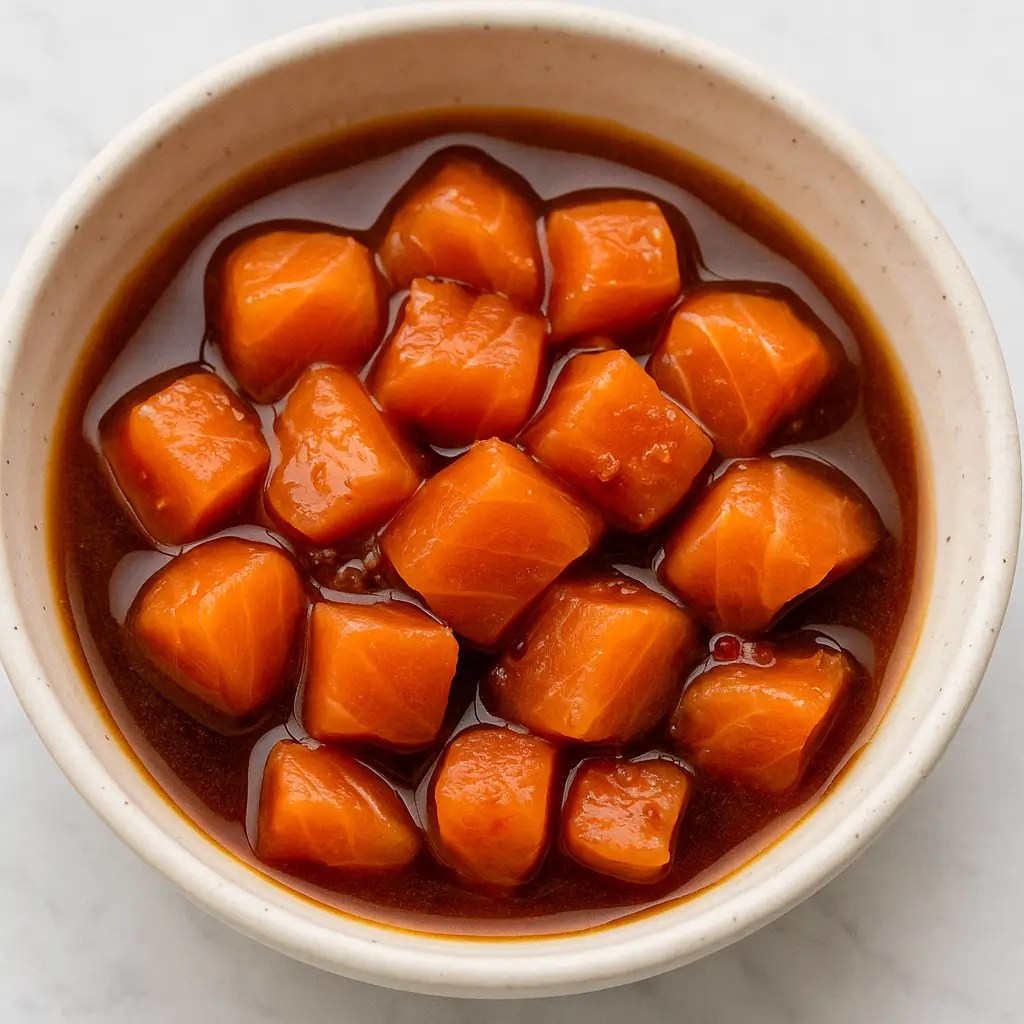
I still remember my first poke in Hawai‘i. The fish was clean and buttery, and the poke bowl sauce tied every bite together. I keep a jar of poke bowl sauce for weeknights. I whisk it in minutes, then either marinate briefly or drizzle poke bowl sauce right before eating. Here’s how I build a balanced poke bowl sauce, the spicy path, smart swaps, and safe storage.
Before we dive in, line up your toppings. Warm rice, seaweed salad, edamame, cucumber, avocado, and sesame seeds turn a simple bowl into a weeknight ritual. This same poke bowl sauce doubles as a quick cucumber salad dressing and a dip for salmon bites.
If you are new to poke bowl sauces and still deciding on the best sauce for poke bowl, this guide keeps it simple. Some readers even search for the exact phrase “sauce poke bowl” when they want a fast answer. You will find both a clean classic and a spicy poke sauce path below, plus an easy poke bowl dressing variation and smart condiments for poke bowls that make weeknight cooking feel easy.
What is a poke bowl sauce
A classic poke bowl sauce is a shoyu style blend. The base is low sodium soy sauce or tamari for umami, rice vinegar for lift, toasted sesame oil for a nutty aroma, and fresh aromatics like ginger, garlic, and scallions. Some versions add sesame seeds for texture. If you want heat, fold in red pepper flakes, sriracha, or chili oil. Use poke bowl sauce two ways. Marinate cubed fish for a short chill so the edges pick up flavor fast, or drizzle over an assembled bowl so the fish stays bouncy.
What makes a great sauce for poke bowl
I build every batch of poke bowl sauce with a simple framework:
- Umami from soy sauce or tamari
- Acidity from rice vinegar
- Nuttiness from toasted sesame oil
- Aromatics from ginger, garlic, and scallions
- Heat if you like a spicy finish
If your bowl already includes salty elements like seaweed salad or furikake, start with low sodium soy so the poke bowl sauce doesn’t overpower the rice or fish. When I want deeper flavor, I give the fish a short marinade in the fridge. When I want the cleanest texture, I skip the soak and spoon poke bowl sauce on top. That small choice keeps the bowl balanced. It all comes back to a well balanced poke bowl sauce.
Ingredients you’ll need
I test and tweak until the poke bowl sauce tastes bright and savory.
- Soy sauce vs tamari vs coconut aminos
Soy sauce and tamari deliver the savory backbone. Tamari is often gluten free. Coconut aminos are soy free and sweeter, so reduce them a little and add salt or a few drops of rice vinegar to keep the poke bowl sauce balanced. - Rice vinegar or ponzu
Rice vinegar is clean and bright. Ponzu adds citrus and mild sweetness. If using ponzu, ease back on sesame oil. - Toasted sesame oil
Use toasted. It gives poke bowl sauce a nutty aroma. - Heat options
Crushed red pepper flakes give even warmth. Sriracha adds a sweet heat. Chili oil adds toasty depth.
Recipe of Poke Bowl Sauce

Ingredients
- 1/4 cup soy sauce
- 1/4 teaspoon sesame oil
- 1/4 teaspoon sriracha (optional)
- 1 teaspoon rice vinegar
- 1/2 teaspoon garlic, minced
- 1/4 teaspoon ginger, grated
- 1/2 teaspoon lime juice
Step by step instructions
- Combine ingredients in a small bowl and stir until blended.
- Toss gently with cubed tuna or salmon right before eating or after a brief chill.
Notes
- For gluten free bowls, use tamari one to one for soy, then taste before adding extra salt.
- For a creamy poke bowl dressing, whisk a spoon of Kewpie mayo into a small portion of the base until glossy and pourable. It pairs well with a salty sweet poke bowl sauce.
How I use it: marinate or drizzle
When I want bolder flavor, I marinate the fish in poke bowl sauce for 20 to 30 minutes in the fridge. That seasons the edges while keeping the center tender. When I want a super clean texture, I skip the soak and drizzle poke bowl sauce right before eating. For assembly, I lean on warm rice, seaweed salad, edamame, cucumber, avocado, and sesame seeds.
If I cook fish, I sear salmon bites and toss with a spoon or two of poke bowl sauce. Finish with a little more poke bowl sauce at the end.
Make it yours: simple swaps
- Gluten free
Use tamari for a gluten free batch. Taste and adjust with a splash of water or vinegar if needed. - Soy free
Coconut aminos make a soy free version. Reduce any sweetener and add a pinch of salt to balance. - Mild to spicy
Reduce or skip pepper flakes for mild bowls. For more heat, add more flakes or a little sriracha to your poke bowl sauce. - Citrus lift
A splash of yuzu or lime wakes up fatty fish. - Creamy path
Thin Kewpie mayo with rice vinegar and a spoon of base sauce for a silky drizzle.
As you test, keep the poke bowl sauce balanced so it supports the fish. Taste a cube with rice and adjust salt or acid as needed. A tiny fix can transform your poke bowl sauce.
Storage and food safety
I refrigerate poke bowl sauce in a clean jar and make small batches. Food safety guidance recommends keeping refrigerators at or below 40°F and freezers at 0°F. That habit protects quality and reduces risk from time in the temperature danger zone. U.S. Food and Drug Administration
If you plan to serve raw fish at home, know that the term sushi grade is not legally standardized. Safety depends on proper freezing for parasite control and careful handling.
For nutrition, remember that soy sauce is very high in sodium per tablespoon. A nutrition database entry for shoyu lets you compare brands and plan pours. My Food Data
FAQ
Can I make poke sauce gluten free or soy free
Yes. Use tamari for gluten free and coconut aminos for soy free. With aminos, adjust sweetness and salt for balance.
How long does poke sauce last in the fridge
Keep it for a short window, sealed and cold. Treat creamy versions like perishable dressings.
What is poke bowl sauce made of
Soy or tamari, rice vinegar, toasted sesame oil, ginger or garlic, scallions, and sesame seeds. Add red pepper flakes, sriracha, or chili oil for heat.
How do I make spicy poke sauce
Start with the base, then add red pepper flakes for gentle heat or sriracha for sweet heat. When the heat is right, the poke bowl sauce wakes up the whole bowl.
Pro tips from my kitchen
When you dial salt and acid correctly, poke bowl sauce turns basic rice and fish into a full meal.
- Cut fish in even 3/4 inch cubes for uniform seasoning.
- Keep marinating short so the texture stays silky.
- Start with low sodium soy if your bowl includes salty toppings.
- Fold scallions and a pinch of sesame seeds right into the mix for shop style freshness.
Poke Bowl Sauce recipe

Ingredients
Poke Sauce
- 1/4 cup soy sauce
- 1/4 tsp sesame oil toasted
- 1/4 tsp sriracha optional
- 1 tsp rice vinegar
- 1/2 tsp garlic minced
- 1/4 tsp ginger grated
- 1/2 tsp lime juice
Instructions
- Combine all ingredients in a small bowl and stir until blended.
- Toss gently with cubed tuna or salmon right before eating or after a brief chill.
Notes
Tell me how yours turned out
Drop a comment with your fish choice, heat level, and favorite toppings. Share your creatives and your smartest tweak so we can make this sauce even better together.










really good job. I like your creatives.
I like how this recipe balances sweet and spicy flavors in the poke bowl sauce. It seems easy to make and would really enhance fresh ingredients.